












Why Does Hair Fall Out? 10 Unexpected Reasons in Warsaw

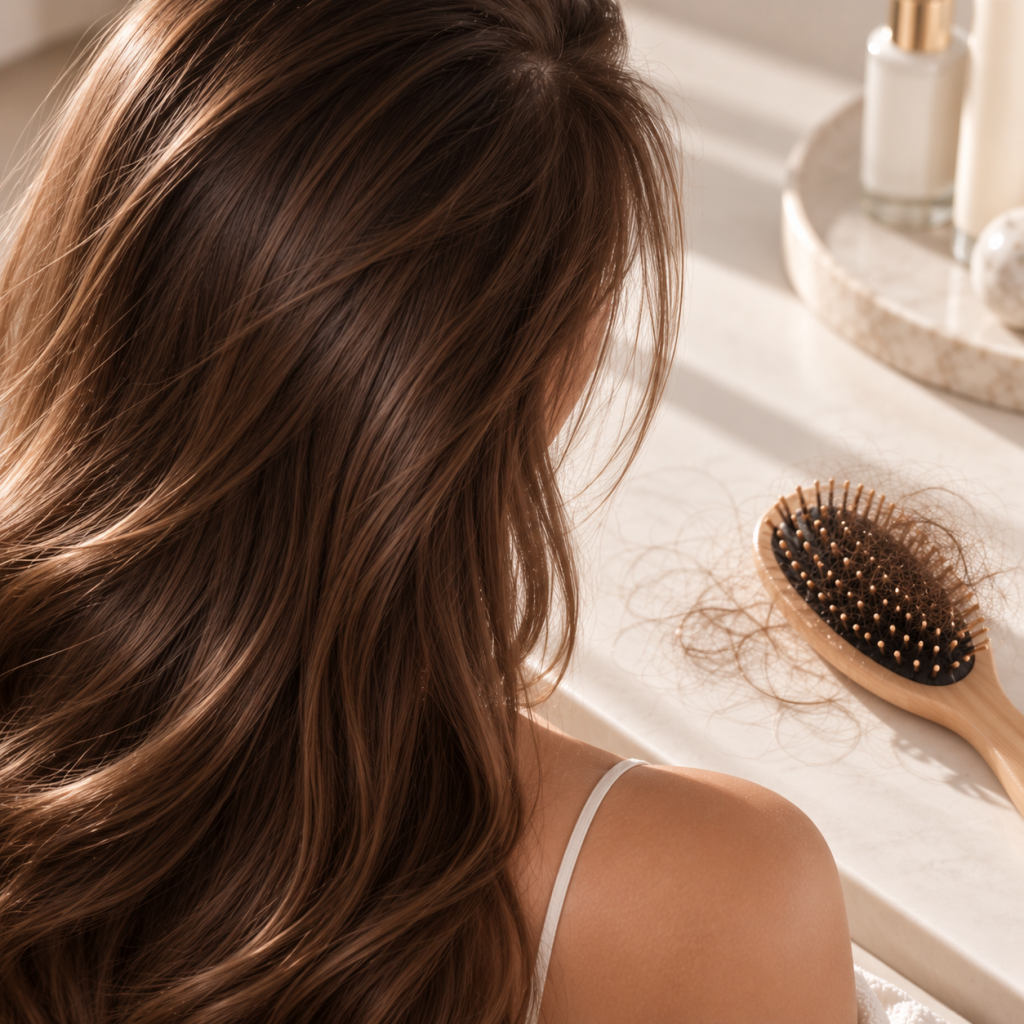
More hair on your pillow, in the shower, or on your brush is one of the signals that people ignore for years or chalk up to the "season." However, excessive shedding can hide a whole range of causes, and by no means are all of them obvious. Learn about 10 unexpected factors that trigger hair loss.
Why Hair Falls Out and When It Is Still Normal
Hair lives by its own cycle: the growth phase (anagen) lasting 2–6 years, the transitional phase (catagen), and the resting phase (telogen), after which the hair sheds and gives way to a new one. According to data from the American Academy of Dermatology, a daily loss of 50–100 hairs is an absolute physiological norm.
But when the number exceeds this threshold, and new hairs grow slower or thinner, it becomes a reason to consult a specialist. The causes vary from internal disorders to daily habits. This is where it gets most interesting: why hair falls out is often explained not by a single reason, but by a combination of several factors at once.
Chronic Stress That Acts with a Delay
Many have heard that stress and hair loss are closely linked, but few know why this happens. Emotional tension and chronic lack of sleep trigger telogen effluvium (stress-induced hair loss), causing hair follicles to enter the resting phase en masse. This results in noticeable shedding 6–12 weeks after the stressful event.
A study in the journal Nature (2021) showed that a prolonged elevation of cortisol suppresses follicle stem cells, inhibiting hair regeneration. For example, you went through a difficult month in February, and your hair "responded" to you in April. It is precisely this delay that makes people look for the cause in the wrong place.
Deficiencies That Are Not Visible Right Away
Nutrient deficiencies and hair loss are among the most common yet least obvious causes. Even when you feel perfectly fine, your body can signal a lack of resources specifically through the condition of your hair.
Ferritin
A level below 30 nanograms per milliliter is associated with telogen effluvium, even with normal hemoglobin levels.
Vitamin D
Its receptors are located directly in the hair follicles, so a deficiency disrupts the growth cycle.
Zinc
Participates in protein synthesis and follicle cell division.
Protein
Hair is almost pure keratin. When protein is scarce, the body "shuts down" non-essential functions.
The link between ferritin and hair loss is confirmed in the Journal of Korean Medical Science. Checking these indicators is only worthwhile based on blood test results.
Hormonal Imbalances That Affect Hair Density
Hormones and hair loss are a separate chapter in trichology. The causes of hair loss in women often lie right here: after childbirth, during perimenopause, with PCOS, or with thyroid diseases, the levels of estrogen, progesterone, and androgens change, and the follicles are the first to react.
The causes of hair loss in men are most often related to dihydrotestosterone (DHT), which gradually miniaturizes follicles in genetically predisposed individuals. According to the Endocrine Society, thyroid disorders are one of the most frequent endocrine causes of diffuse hair loss in both sexes. It is practically impossible to determine a hormonal factor on your own, which is why a comprehensive professional diagnosis is required.
Incorrect Scalp Care
While stress and hormones are straightforward concepts, your own shampoo rarely falls under suspicion. Yet care and hair loss are connected much more closely than it seems at first glance. Aggressive shampoos with sulfates destroy the hydrolipid barrier of the scalp. Dry shampoo, when used regularly, clogs the follicles. Heavy styling products without thorough washing block skin respiration.
The condition of the hair is also affected by frequent aggressive washing, as it destroys the beneficial microflora that protects against inflammation. The hair follicle is an extremely sensitive structure, and chronic irritation of its environment inevitably affects the quality and density of the hair.
Tight Hairstyles and Mechanical Damage
Traction alopecia is the medical term for hair loss caused by constant pulling. Tight ponytails, buns, dreadlocks, hair extensions, and the regular use of curling irons and straighteners create mechanical stress on the hair follicle.
According to the American Academy of Dermatology, traction alopecia is reversible in its early stages. However, under years of pressure, scarring of the follicle can become irreversible. This cause of hair loss is particularly common in women with long hair and is underestimated most frequently.
Scalp Problems That Are Easily Confused with Simple Irritation
Seborrheic dermatitis, dandruff, folliculitis, skin hypersensitivity, and microbiome disruption all significantly increase hair loss. Chronic inflammation in the follicle area literally "pushes" it out of the skin ahead of time.
Itching, flaking, and excessive oiliness bring more than just cosmetic discomfort. Dermatological studies confirm a direct link between chronic seborrheic inflammation and increased telogen effluvium. To ignore these signals means allowing the problem to progress.
Medications and Therapies That Can Weaken Hair
Certain medications have a side effect in the form of excessive hair loss. The risk groups include hormonal drugs, antidepressants, beta-blockers, isotretinoin, and anticoagulants.
This is not a reason to stop therapy on your own. However, if you notice a deterioration in the condition of your hair against the background of a new medication, it is worth discussing this with your doctor. Sometimes, adjusting the treatment plan resolves the issue without harming the primary therapy.
Crash Diets and Rapid Weight Loss
Our body is a complex system. With a sharp reduction in nutrition, the body redistributes resources in favor of critical organs: the heart, brain, and kidneys. Hair is, unfortunately, at the very bottom of this "survival rating."
Therefore, 2–4 months after a strict diet or starvation, people frequently face massive telogen effluvium. According to Nutrition Reviews, a sharp hypocaloric diet is one of the most common triggers of diffuse hair loss in women aged 20–40. What causes hair to fall out in this case? It is precisely the lack of the so-called "building material."
Seasonal and Environmental Factors That Few People Think About
Seasonal hair loss is a fairly widespread phenomenon. In autumn and spring, follicles synchronize their cycles, making natural shedding more noticeable. Contributing to this are hard water with chlorine, which destroys the hair cuticle; ultraviolet radiation, which oxidizes the lipids of the hair shaft; dry air in heated rooms; and urban pollutants that settle on the scalp.
These factors are rarely an independent cause, but they consistently worsen the picture in combination with other triggers.
Hidden Systemic Diseases
Our hair is literally a mirror of the internal state of the body. Diseases causing hair loss include hypothyroidism and hyperthyroidism, iron deficiency anemia, systemic lupus erythematosus, psoriasis, celiac disease, and chronic inflammatory processes. In these conditions, hair loss is often the first and only noticeable symptom at an early stage.
Specialists do not advise looking for the causes of excessive hair loss on your own: without diagnostics, the risk of ineffective treatment is extremely high. Consulting a qualified specialist is the best decision.
How to Understand That It Is Time to See a Specialist
When should hair loss be a cause for concern? Here are the signals you should pay attention to:
- Active shedding lasts for more than 6–8 weeks.
- The volume of the hair has noticeably decreased.
- Bald patches or a receding hairline have appeared.
- The scalp itches, flakes, or is red.
- The hair has become thin and brittle without visible reasons.
- There are accompanying symptoms: fatigue, weight changes, sleep disturbances.
If you note at least two points, this is a reason not to delay a visit to a trichologist. The earlier the cause is determined, the more effectively and quickly the shedding process can be stopped.
How to Support Your Hair Daily and Where to Start
Constantly asking yourself what to do when hair falls out? Start with the basics: a mild shampoo without aggressive sulfates, a balanced diet with a sufficient amount of protein and micronutrients, minimizing thermal stress, healthy sleep and stress management, and close observation of the dynamics of your hair condition.
But remember: there is no single universal remedy or method for everyone. The non-obvious causes of hair loss are unique to each person, and what worked for someone else may prove ineffective for you. The only truly universal solution is an individual diagnosis and finding the causes of hair loss in your specific case.
Book a Consultation and Find Out the Cause of Your Hair Loss!
It is better to understand the cause than to change shampoos for years in the hope of a miracle. At Laserhouse, we approach the condition of the hair and scalp comprehensively: we perform diagnostics, prescribe additional laboratory tests if necessary, determine potential risk factors, and look closely at your lifestyle. A consultation is the first step toward a real solution to the problem of hair loss.

No reviews or questions yet