









Nutrition and the Condition of the Hair and Scalp in Warsaw

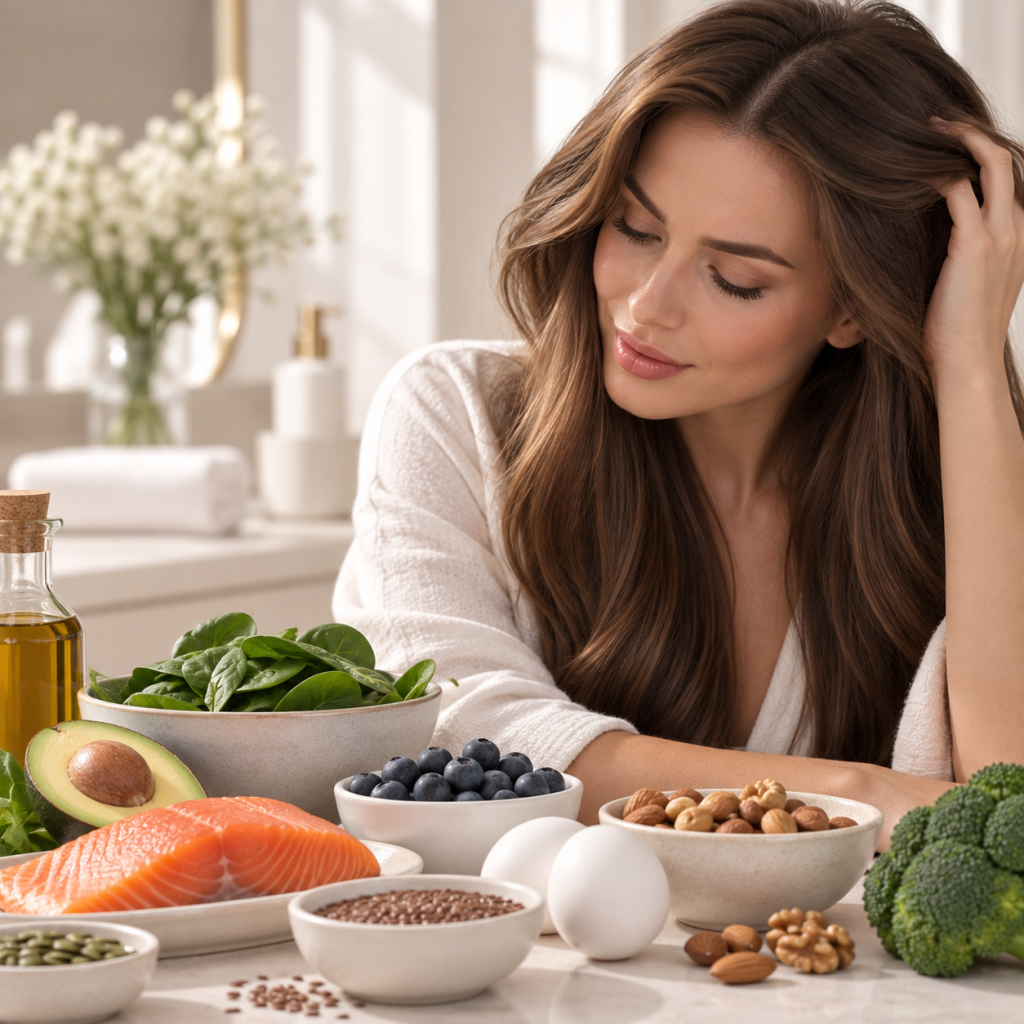
Diet and Hair Condition: How Nutrition Affects Hair and Scalp Health
You carefully select your shampoo, masks, and serums — yet your hair still looks tired, dull, and brittle? This is a familiar situation for many. However, the reason may not lie at all in a bottle from the pharmacy shelf, but rather on your plate.
The impact of diet on hair is a topic that trichologists and dermatologists are discussing increasingly often. And for good reason: the condition of the scalp, as well as the thickness, shine, and density of the hair, directly reflect what is happening inside the body. External care, even the most expensive, is merely the surface layer. The true foundation of healthy and voluminous hair consists of the nutrients that enter the body with food every day.
Therefore, if you want to do more than just mask the problem and actually understand its causes, then this article is exactly for you.
Why Does Hair React So Quickly to Changes in the Diet?
Hair is not a vital organ. The body understands this better than we do. When something is missing in the diet, the body redistributes its resources: the heart, brain, liver, and immune system will receive theirs first. Meanwhile, the hair follicles are at the very back of the line.
This is precisely why deficiencies and the condition of the hair often become one of the first external signals that something is wrong in the body. Hair begins to fall out more actively, becomes thin, dry, or, conversely, oily. Nails break. Skin becomes dull. All of these are ways in which your body "speaks" to you: review your menu.
According to data from Dermatology Practical & Conceptual (2017), nutritional deficiency is one of the most common yet underestimated causes of excessive hair loss.
Protein as the Foundation of Strong Hair
Hair consists of approximately 95% keratin, which is a protein. If the body does not receive enough amino acids for its synthesis, the consequences will not keep you waiting: hair becomes brittle, grows slower, and falls out more actively.
With a chronic protein deficiency, the body can even "stop" hair growth, shifting the follicles into the resting phase (telogen). After 2–3 months, this leads to noticeable telogen effluvium — a phenomenon that often coincides with the feeling that you are quickly beginning to lose your hair.
Protein and Hair Condition: From Which Products Can You Obtain Protein?
- Meat, poultry, fish, seafood
- Eggs (particularly valuable due to biotin and sulfur-containing amino acids)
- Legumes: lentils, chickpeas, beans
- Dairy products: cottage cheese, kefir, yogurt
- Ornuts and seeds
The minimum recommended daily protein intake for adults is 0.8 grams per kilogram of body weight, but for those who are actively involved in sports or notice hair problems, this figure can be higher (World Health Organization, 2007).
Iron, Ferritin, and Hair Loss
If you are a woman of childbearing age with active hair loss, the first thing worth checking is your ferritin level (the storage protein that maintains iron in the body).
Iron participates in transporting oxygen to tissues, particularly to the hair follicles. When it is lacking, the follicles "suffocate" and transition into a resting mode. Hair loss and a diet enriched with iron often become the starting point for hair restoration.
A study published in the Journal of Korean Medical Science confirms: a low ferritin level (even without clinical anemia) is associated with chronic diffuse hair loss, especially in women.
Products Rich in Iron
- Red meat and liver (heme iron — absorbed best of all)
- Spinach, broccoli, legumes (non-heme iron — absorbed worse, but in combination with vitamin C — significantly better)
- Pumpkin seeds, sesame seeds
- Buckwheat, oatmeal, lentils.
Vitamine and Minerals Important for the Hair and Scalp
Vitamins for the hair and scalp
- Vitamin D. Its deficiency is linked to alopecia. Receptors for vitamin D are present even in the hair follicles — it directly influences their cycle. Sources: fatty fish, eggs, dairy products, and most importantly — sunlight (Dermatology and Therapy, 2017).
- Zinc regulates the function of the sebaceous glands and participates in protein synthesis. Its deficiency is one of the frequent causes of seborrheic dermatitis and excessive flaking of the scalp. You will find it in meat, nuts, seeds, and whole grains.
- Biotin (vitamin B7). Despite the marketing hype, the real role of biotin is limited to cases of its actual deficiency. However, in the event of a deficiency — yes, it affects the quality of hair and nails. Sources: eggs, nuts, avocados, sweet potatoes.
- Vitamin B12 — critically important for the formation of red blood cells, which deliver oxygen to the follicles. It is lacking primarily in vegetarians and vegans.
- Selenium protects cells from oxidative stress and regulates thyroid function — and this is directly connected to the condition of the hair. The Brazil nut is one of the richest sources.
- Magnesium promotes the absorption of other minerals and participates in over 300 enzymatic reactions. Its sources: green leafy vegetables, nuts, seeds, legumes.
Healthy Fats and Their Significance for the Scalp
When it comes to diet and the scalp, fats undeservedly remain in the shadow. And in vain.
Omega-3 and omega-6 fatty acids are important components for healthy hair and form the foundation of the protective barrier of the scalp. They maintain its hydration, elasticity, and ability to resist external irritants. With a deficiency of fats, the skin becomes dry, flakes, and itching appears — even if you do not suffer from any chronic disease.
Furthermore, fat-soluble vitamins (A, D, E, K) — among which are those critically important for the condition of hair — simply will not be absorbed without fats in the diet.
Where to Find Healthy Fats?
- Fatty fish: salmon, mackerel, herring
- Avocados
- Cold-pressed olive oil
- Walnuts and flaxseeds (leaders among plant sources of omega-3)
- Chia seeds.
Do Strict Diets Worsen Hair Condition?
Studies by trichologists show: sharp weight loss, starvation, and rigid diets often become a stress for the body and can cause mass hair loss after 2–4 months. Healthy nutrition for hair is not about severe restrictions, but rather a stable and diverse diet. A study in the Indian Journal of Dermatology, Venereology and Leprology (2009) confirms: dietary extremes are one of the leading factors of diffuse hair loss in women under 40 years old.
How Diet Affects Scalp Oiliness, Dryness, and Irritation
How diet affects the scalp is a question that is being asked increasingly often. And there are valid reasons for this.
An excess of sugar and simple carbohydrates triggers insulin spikes and increased secretion of sebum — hence an oily scalp and the feeling of "dirty" hair just a few hours after washing. On the other hand, dryness, flaking, and irritation most often signal a deficiency of fats or vitamins A and E. In both cases, cosmetics will only provide a temporary effect if the root of the problem lies in the diet.
Products That Are Worth Including in the Diet for Healthy Hair
Healthy nutrition for hair
No superfoods or magic pills. Only those products that are easy to find in any store and that truly support hair health:
- Protein sources: eggs, chicken breast, salmon, lentils — for the building material of keratin.
- Vegetables and greens: spinach, broccoli, carrots, bell peppers — vitamins A, C, and iron.
- Fruits: citrus fruits, kiwi, strawberries — vitamin C for better iron absorption.
- Nuts and seeds: walnuts, pumpkin seeds, almonds — zinc, omega-3, vitamin E.
- Grains: buckwheat, oatmeal, whole-grain bread — B vitamins and iron.
- Fatty fish: salmon, mackerel, sardines — omega-3 and vitamin D.
- Legumes: chickpeas, lentils, beans — plant iron and protein.
A diet for healthy hair is not a diet in the classical sense, but rather a method of nutrition that must become a habit if you want to have healthy and thick hair.
What May Be Lacking in the Diet When Hair Loses Its Shine and Density
What to eat during hair loss is a question that thousands of people search for on Google every day. However, the problem often lies not in one specific product, but in the overall balance of nutrition.
The most common mistakes:
- Too little protein — especially relevant for those who follow a plant-based diet without careful planning of their meals.
- Very low calorie intake — the body "economically" shuts down "secondary" functions, including hair growth.
- Monotonous diet — even if you eat correctly, but eat the same thing every day, the risk of micro-deficiencies increases.
- Not enough vegetables and fruits — a deficiency of antioxidants and vitamin C, which helps absorb iron.
- Absence of healthy fats — due to the fear of calories or popular low-fat diets.
- Lack of products rich in micronutrients — zinc, selenium, and magnesium vanish from the table first during a "cleansing" of the diet.
Can Supplements Replace a Well-Balanced Diet?
To put it briefly — no. Supplements make sense only in the case of a confirmed deficiency. Taking "vitamins for hair" without medical tests often yields no result, and an excess of certain substances, such as vitamin A, can even intensify hair loss.
The National Institutes of Health (NIH) emphasizes: most studies supporting the effectiveness of hair supplements were conducted on people with real deficiencies — and the results are not always reproducible for healthy individuals.
First — tests, then — correction of the diet, and only if necessary — supplements. Not the other way around.
How to Support the Hair and Scalp Every Day Through Nutrition — What to Eat for Healthy Hair
- Eat regularly — 3–4 meals a day help maintain a stable metabolism.
- Add protein to every meal: eggs, meat, fish, legumes, or cheese.
- Do not exclude healthy fats — olive oil, nuts, and avocados are important for the condition of hair.
- Drink enough water — dehydration affects the scalp and hair elasticity.
- Eat a diverse diet so that the body receives more micronutrients.
Remember: the first results are usually noticeable after 3–4 months of regular care and a balanced diet.
When a Hair Problem Requires Broader Diagnostics
Even if you eat a balanced diet and take care of yourself — hair can still continue to fall out. Sometimes the reason lies deeper:
- Hormonal disorders — thyroid dysfunction (hypo- or hyperthyroidism), polycystic ovary syndrome, changes in androgen levels.
- Chronic stress — cortisol in excess directly suppresses hair growth.
- Autoimmune conditions — for example, alopecia areata.
- Side effects of medications — certain drugs can provoke diffuse hair loss.
Sign Up for a Consultation — and Find Out What Affects Your Hair
If you notice that your hair has become thin, brittle, or is falling out more actively — sign up for a consultation with a specialist.
The specialist will help evaluate the condition of your hair and scalp, clarify the possible reasons for the deterioration, and draw up an individual plan of action.

No reviews or questions yet