












Hydrafacial or manual cleansing — which is better to choose after summer? in Warsaw

After summer, the skin rarely looks as fresh as we would like: dull tone, clogged pores, minor breakouts. At this point, many people ask themselves the question Hydrafacial or manual cleansing — and there is no unequivocal answer here, because everything depends on the condition of your skin. Let’s figure out how these two procedures differ and which one is right for you.
Why does the skin need thorough cleansing after summer?
In summer, the skin is always overloaded: ultraviolet radiation, sweat, excess sebum, and dense sunscreens weigh it down at the same time. According to the American Academy of Dermatology, when sweat mixes with bacteria and skin oil, it clogs pores and triggers breakouts — which is exactly why problematic skin so often worsens in summer.
Solar radiation also thickens the stratum corneum of the skin as a protective reaction, causing dead cells to remain on the surface longer and narrowing the outlet for sebum. Combined with the increased activity of the sebaceous glands, this creates ideal conditions for the formation of comedones. Therefore, the question of how to cleanse the skin after vacation is relevant to practically everyone.
That is why professional cleansing is a mandatory first step before resuming intensive home care in autumn: serums with acids or retinol work much more effectively on previously cleansed skin than on top of a layer of sebum and dead cells.
In addition, after vacation, the skin often suffers from chlorine or sea salt, prolonged stays in air-conditioned rooms, and sudden temperature changes during travel. All this weakens the protective barrier, so after summer specialists recommend facial treatments after vacation.
What is the Hydrafacial procedure?
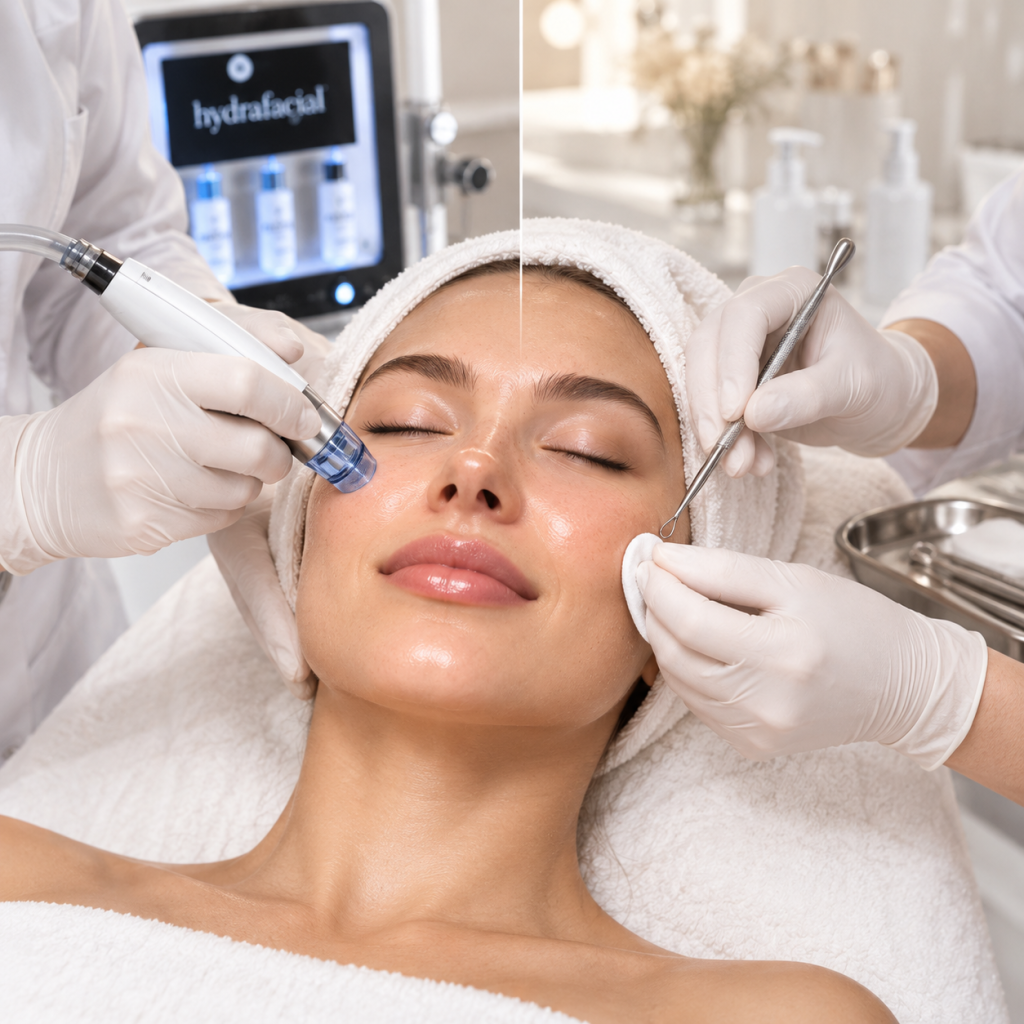
Hydrafacial is a device-based method that combines cleansing, exfoliation, vacuum extraction of impurities, and saturation of the skin with serums in one cycle using a special applicator.
How is the procedure performed?
The technology is based on a patented vortex system that simultaneously removes impurities from the pores through a vacuum applicator and delivers active serums into the skin. The procedure consists of several stages:
- Cleansing and exfoliation. Keratinized cells and surface impurities are gently removed.
- Vacuum extraction. Using a special applicator, the pores are cleansed of sebum and accumulated impurities.
- Saturation with active serums. At the final stage, the skin receives serums with hyaluronic acid, peptides, and antioxidants.
Who is Hydrafacial best suited for?
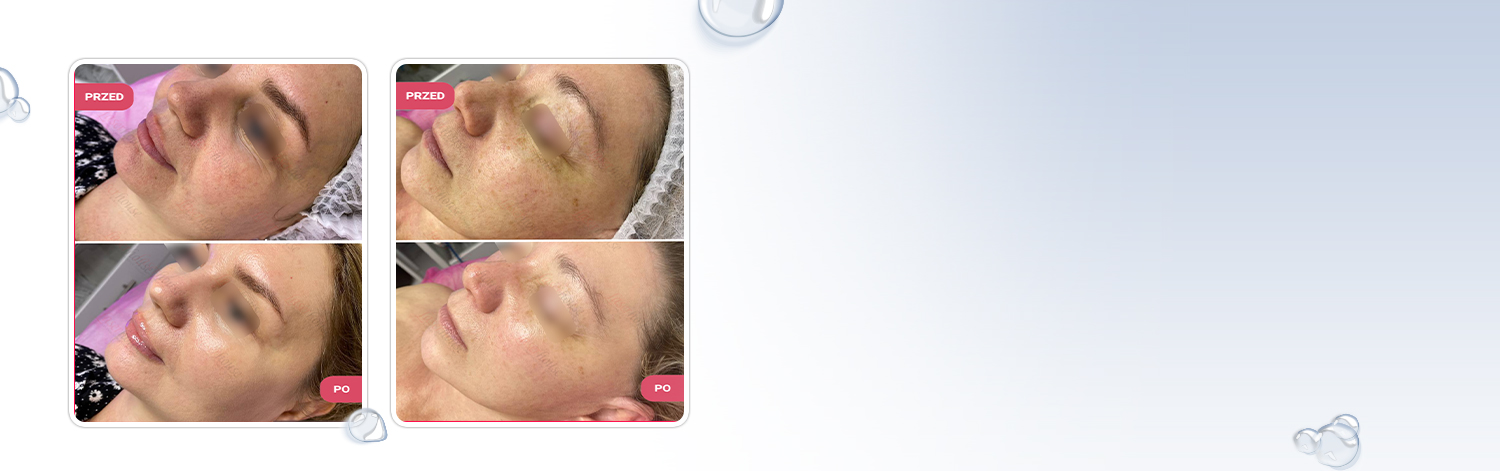
This method works particularly well for dull, dehydrated skin, mild pore congestion, and minor superficial imperfections. A clinical study of hydradermabrasion, published in the NIH/PMC database, showed an improvement in the structure of the stratum corneum and the evenness of the epidermal surface after just one session of the procedure. Hydrafacial for blackheads works well with minor, superficial comedones. As for Hydrafacial for pigmentation, it helps more in a maintenance mode: antioxidant serums even out the skin tone, but the procedure has a limited effect on deep pigmentation.
What effects can be expected?
Hydrafacial effects are noticeable almost immediately after the procedure: the skin looks more hydrated and fresh, the tone becomes more even, and minor irregularities are smoothed out. The effect is cumulative — regular sessions keep the skin in a consistently better condition, although each individual procedure works mainly at the superficial level.
What is the essence of manual facial cleansing?
Manual facial cleansing is a cosmetology procedure during which a specialist manually removes comedones and dense impurities from the pores without the use of device-based technology.
How is manual cleansing performed?
- Cleansing and skin preparation. Makeup is removed, after which the skin is steamed or enzyme products are applied to soften the stratum corneum.
- Mechanical cleansing. The cosmetologist manually, using sterile instruments, removes impurities and the contents of the pores.
- Soothing and moisturizing. After cleansing, soothing masks or lotions are applied, and the procedure is completed with moisturizing care.
In which cases is manual cleansing more effective?
When it comes to deep, dense, or "mature" comedones, in the question of manual cleansing or Hydrafacial, the advantage is more often on the side of the manual method. Device-based vacuum extraction works well with superficial impurities, but deeply clogged pores often require precise mechanical intervention that only an experienced cosmetologist can provide.
Advantages and limitations of manual cleansing
The main advantage is targeted control and the ability to deal even with long-standing impurities. At the same time, the procedure may be accompanied by temporary redness and mild discomfort, and the skin needs time to recover — usually from several hours to 1–2 days, depending on the intensity of the impurities and skin sensitivity.
It is worth remembering that high-quality facial cleansing by a cosmetologist always begins with an assessment of the skin condition.
Hydrafacial or manual cleansing — the most important differences
Procedure comfort
Hydrafacial is performed with almost no discomfort thanks to gentle vacuum action without direct mechanical pressure. Manual cleansing, on the contrary, may feel less comfortable, especially when working with deep comedones.
Effects and recovery time
After Hydrafacial, there are practically no visible marks on the skin — you can immediately return to your usual schedule. After manual cleansing, mild redness may occur, which disappears within a day or two. In terms of the depth of the result, manual cleansing often gives a more pronounced effect with dense impurities, while Hydrafacial better maintains the overall condition of the skin between procedures.
Which skin type is each method suitable for?
For sensitive skin prone to redness, the device-based method is usually more comfortable. For oily and problematic skin with pronounced comedones, a combination of both methods often proves more effective. For combination skin, the choice depends on which problem dominates — dullness and dehydration or dense pore congestion.
Normal skin without pronounced problems is also worth mentioning separately: in this case, both methods work as prevention, and the choice depends more on personal comfort and budget than on the medical necessity of a specific protocol.
Which procedure is better suited after summer?
The best choice of procedure usually depends on what exactly is bothering the skin after the season. If the main problem is dullness, dehydration, and mild skin fatigue without deep impurities, Hydrafacial after summer will be a comfortable and effective solution. If, however, many dense comedones or enlarged pores with long-standing impurities have formed during the summer, facial cleansing after summer is better entrusted to the classic manual work of a cosmetologist.
Often, the best result comes from a combined approach: the device-based method gently prepares the skin, while manual work completes the process where vacuum extraction is powerless. The most accurate way to determine which option is right for you is only after a personal consultation — because the best facial cleansing treatment is always selected individually, taking into account the skin type, the number and depth of impurities.
It is also worth considering the client’s age and skin sensitivity. At a younger age, the skin usually recovers faster even after more intensive mechanical impact, while skin prone to couperose or age-related changes responds better to gentler device-based protocols.
How to care for the skin after professional cleansing?
After any type of cleansing, the skin is particularly sensitive to external irritants, so it requires gentle care.
First of all, it is worth taking care of hydration and sun protection — even in autumn, sunscreen with SPF remains a mandatory element of daily care, since the skin temporarily loses part of its protective barrier after the procedure. Light, non-comedogenic products should be chosen, and aggressive rubbing or scrubs should be avoided during the first few days.
Active ingredients such as retinol, acid peels, and harsh scrubs should be postponed for at least several days after the procedure — the skin needs time to restore its natural barrier before withstanding additional stress. Regularity, not intensity, is the key to a stable result: skin regeneration after summer is a process, not a one-time action.
It is also useful to review your home cosmetics after summer: sunscreens with high SPF that were actively used throughout the season often have a denser texture than is needed in autumn. Replacing them with lighter, non-comedogenic formulas helps the skin "breathe out" and maintain the effect of professional cleansing for longer.
Choose the procedure that meets the needs of your skin at Laserhouse
Choosing between Hydrafacial whether it is worth it and manual cleansing without a personal skin assessment is difficult: skin type, depth of impurities, and sensitivity — all of this affects the final decision. At Laserhouse, a cosmetologist will assess the condition of your skin after summer and select a treatment for congested skin that will provide the maximum effect without unnecessary stress.
Book a consultation — and take the first step toward clean, fresh skin after the vacation season.

No reviews or questions yet