







Cellulite and fluid retention — are they always the same thing in Warsaw
“Orange peel” skin on the thighs, swollen ankles in the evening, a feeling of heaviness in the legs — the most common problem that both men and women may face. But cellulite and water retention are actually two phenomena that are different in nature, which simply tend to appear in the same places and in the same people. Understanding the difference between them directly affects which care products and procedures will really help you specifically, and which will only waste time and money without a noticeable result.
Cellulite and fluid retention — why are they so easy to confuse?
Both phenomena most often appear on the thighs, buttocks, and legs, both change the appearance and feel of the skin, and both can intensify at the same time — for example, in hot weather or after prolonged sitting.
That is why water retention and cellulite are so often confused even by people who closely monitor their bodies: external manifestations can overlap, although the mechanisms behind them are completely different. Popular sources on the Internet often combine both concepts into one general description.
What is cellulite and why does it occur?
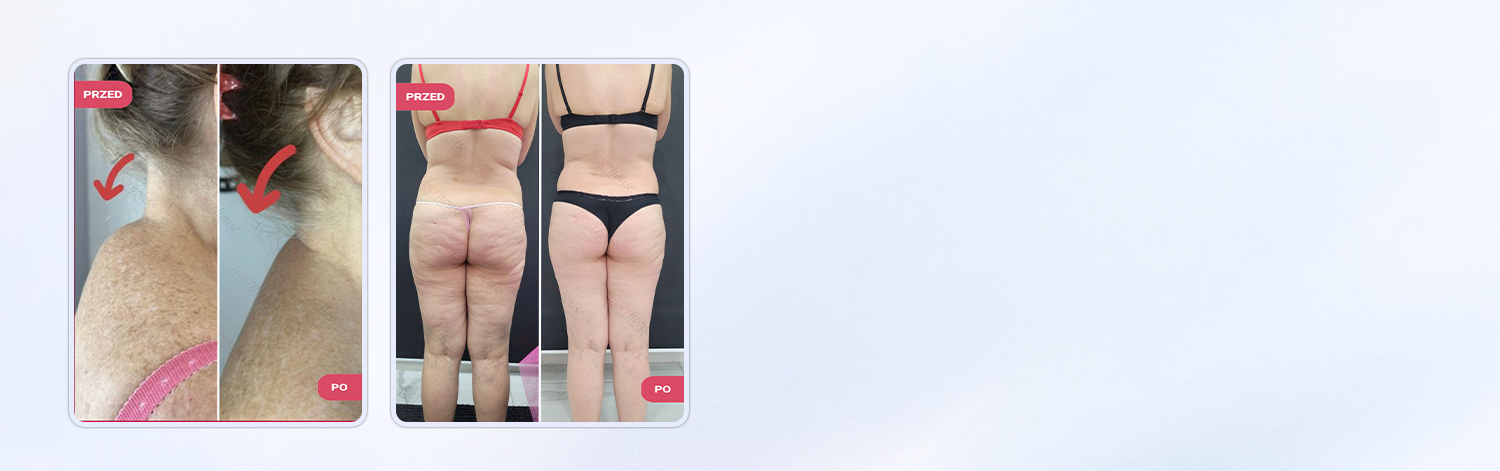
Cellulite is a change in the structure of subcutaneous fatty tissue that manifests as a characteristic uneven, “bumpy” surface of the skin. It is an extremely common physiological phenomenon, not a disease or a consequence of neglecting oneself — it occurs in the vast majority of women regardless of weight or level of physical activity. It is important to emphasize: the presence of cellulite does not indicate poor health or an unhealthy lifestyle — it is a normal feature of tissue structure that the vast majority of women experience at one time or another in their lives.
What does cellulite look like?
The typical appearance of cellulite is an uneven skin surface with small depressions, resembling the texture of orange peel or a mattress. Most often, cellulite on the thighs and cellulite on the buttocks is most noticeable, because it is in these areas that subcutaneous fatty tissue has a particular structure. Less often, manifestations can be seen on the abdomen or upper arms.
What affects the visibility of cellulite?
Where does cellulite come from — a question to which there is no single simple answer. The causes of cellulite include several factors at once:
- the structure of connective tissue (in women, the fibers are arranged vertically, which contributes to the “bulging” of fat lobules through it — unlike in men, where the fibers form a denser mesh structure, so cellulite occurs much less frequently in them);
- the amount and distribution of fatty tissue;
- hormonal balance;
- genetic predisposition;
- age (over time, the skin loses elasticity, which makes unevenness more noticeable);
- lifestyle.
What is fluid retention in the body?
Unlike cellulite, fluid retention (swelling) is a temporary accumulation of excess fluid in the tissues that is not associated with structural changes in fatty tissue. It is a separate physiological process, and that is why it is important not to confuse swelling with cellulite, even if externally they sometimes affect similar areas of the body.
How to recognize signs of fluid retention?
Typical manifestations of water retention in the legs are visible swelling that changes throughout the day (most noticeable in the evening), a feeling of heaviness and tension in the legs, and sometimes marks from socks or shoes on the skin. Unlike cellulite, fluid retention can decrease quite quickly — for example, after a night’s rest with the legs elevated — while the structural manifestations of cellulite do not change so quickly. This contrast in dynamics is one of the simplest ways for a person to independently assess what exactly they are dealing with, although a final consultation with a specialist still provides a more accurate picture.
Is the term “water cellulite” correct?
In cosmetology, the term water cellulite is often encountered — this is what a condition is called when visible skin unevenness is intensified specifically due to fluid retention in the tissues. However, from a medical point of view, this term is more descriptive than precisely diagnostic: what water cellulite looks like actually describes not a separate type of cellulite, but a combination of two different processes — structural changes in fatty tissue and temporary swelling, which overlap and intensify the visible effect.
Therefore, it is more correct to speak not about a “type” of cellulite, but about water cellulite and fatty cellulite as two different, although interconnected, phenomena.
Cellulite or swelling — what are the main differences?
|
Feature |
Cellulite |
Fluid retention (swelling) |
|
Nature |
Structural change in fatty tissue |
Temporary accumulation of fluid |
|
Dynamics throughout the day |
Practically does not change |
May increase in the evening, decrease in the morning |
|
Typical appearance |
Uneven, “bumpy” skin texture |
Smooth swelling, sometimes with a “pit” from pressure |
|
What affects it |
Genetics, hormones, connective tissue structure, age |
Prolonged sitting/standing, heat, hormonal fluctuations, movement |
|
How it responds to rest/movement |
Practically does not change |
Often noticeably decreases |
Swelling and cellulite really are different. Understanding this difference is especially useful during a consultation with a specialist — it helps describe the problem more accurately and receive truly relevant recommendations.
Can cellulite and fluid retention occur at the same time?
Yes, and this is actually quite a common situation. Cellulite as a structural feature of tissue may be present constantly, while fluid retention is periodically superimposed on it — after a long day on your feet, in hot weather, or during certain periods of hormonal fluctuations. It is then that the visibility of the “orange peel” appears more pronounced, although the tissue structure itself has not changed significantly.
This also explains why many people notice that cellulite becomes more noticeable and then less noticeable over a certain period of time.
What affects the worsening of cellulite and periodic swelling?
- A sedentary lifestyle worsens blood circulation and lymph flow, which can simultaneously increase both the visibility of cellulite and the tendency to swelling.
- Prolonged sitting or standing slows the natural drainage of fluid from the legs.
- Hormonal fluctuations — during the menstrual cycle, pregnancy, or other periods of life — affect both fluid retention and, according to some data, the structure of connective tissue.
- Diet, particularly excessive salt intake, can also temporarily increase swelling.
- Stress and chronic lack of sleep also indirectly affect hormonal balance and blood circulation.
How to reduce the visibility of cellulite?
Regular physical activity, especially strength exercises that strengthen the muscles in problem areas, can somewhat improve skin texture and tissue density. Maintaining a moderate, stable body weight can also have a positive effect on the visibility of unevenness, although cellulite also occurs in people with normal weight, so weight loss itself is not a universal solution.
Mayo Clinic notes: none of the available cellulite treatment methods has been fully scientifically proven, so it is important to assess realistic expectations together with a specialist before choosing a specific approach to how to reduce the visibility of cellulite.
Does massage help against cellulite?
Massage for cellulite, particularly intensive manual massage or device-based methods, can temporarily improve microcirculation and slightly smooth the appearance of the skin immediately after the procedure, especially if there is accompanying fluid retention. However, the effect is usually short-lived, and massage itself does not change the structure of connective tissue, which is the main cause of cellulite.
What cosmetology procedures can be used against cellulite?
In professional cosmetology, there are a number of technologies aimed at improving the appearance of cellulite, and Laserhouse offers those whose effectiveness has been confirmed by practice and scientific data.
Endermology for cellulite is one of the well-known methods that combines vacuum massage and mechanical stimulation of the skin. Mayo Clinic notes that endermology is approved by the FDA as a medical device with a low risk of side effects.
Cellulite treatments also include:
- Endosphere — one of the methods used to correct cellulite and swelling. Compression-microvibration action helps improve lymphatic drainage and microcirculation, helps reduce fluid stagnation in the tissues, swelling, and the severity of skin unevenness.
- INDIBA RF lifting can be used in combination with Endosphere. Radiofrequency action is aimed at warming the tissues, improving microcirculation and skin condition. The combination of methods makes it possible to simultaneously work with manifestations of cellulite, swelling, skin tone, and skin quality.
- Vacuum-pulse thermomassage combines vacuum action with thermal action. The procedure helps activate blood circulation and lymphatic drainage, helps reduce congestion and swelling, and also makes the skin surface more even.
Choose a procedure according to the needs of your body
Understanding the difference between cellulite and fluid retention is the first step toward choosing a truly effective approach to body care, instead of trying to solve two different problems at the same time with one product. Proper diagnosis helps avoid disappointment from procedures that are simply not intended for your specific situation and save time and resources in searching for “that very” solution.
Laserhouse specialists will assess the condition of your body, determine which factors predominate in your case — structural features of the tissue, accompanying fluid retention, or a combination of both — and select a procedure that realistically meets your needs, without exaggerated promises. Book a consultation today to receive an honest, individualized body care plan.

No reviews or questions yet