











Leg Swelling and a Feeling of Heaviness — Causes and Solutions in Warsaw

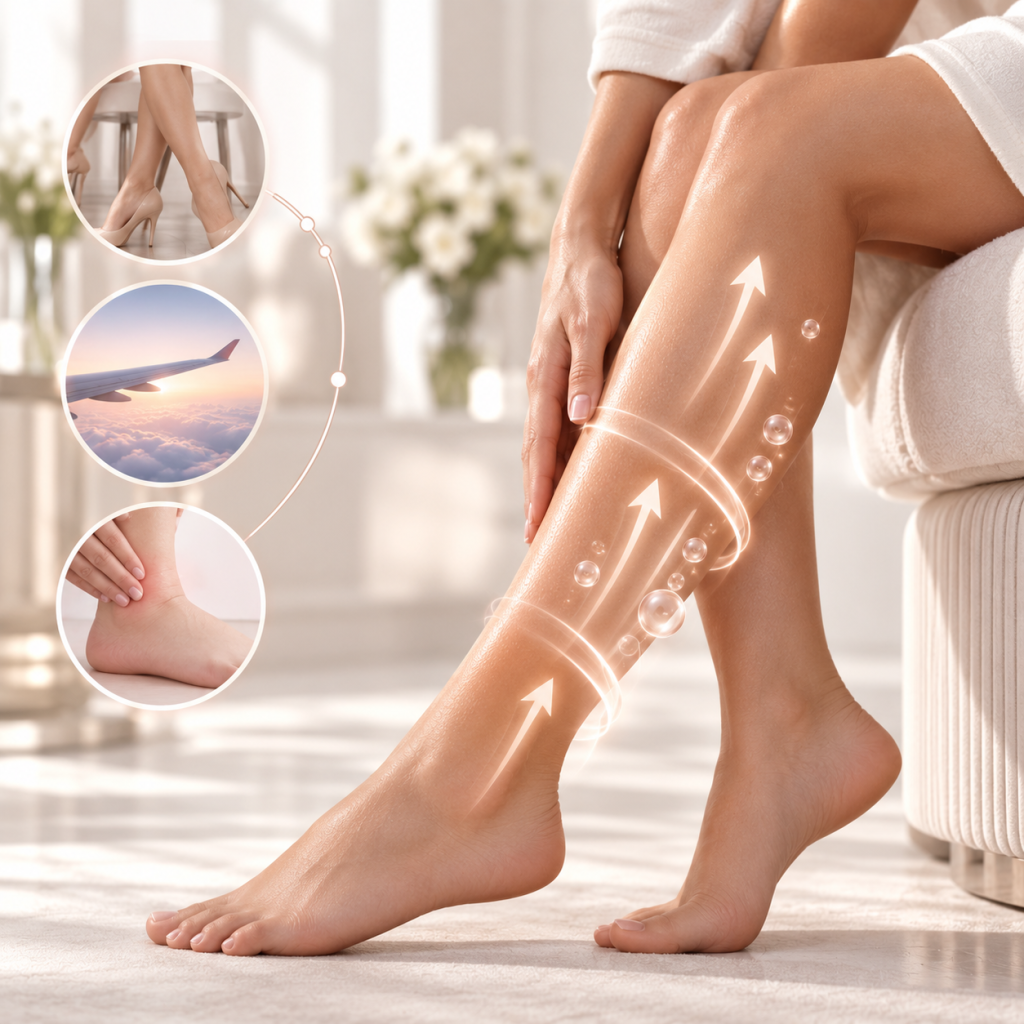
Do you come home after a workday and can barely take off your shoes because your legs are swollen, heavy, and feel like "lead"? This sensation of heavy legs is familiar to thousands of people. Leg swelling after a full day is one of the most common complaints of modern individuals, especially those who lead a sedentary or standing lifestyle.
Let's break down the causes of leg swelling in more detail—why legs swell, when it is a temporary phenomenon, and when it is a reason to take the problem seriously. You will learn how the swelling mechanism works, which home methods really help, and which modern professional treatments for leg swelling provide the most lasting results.
Leg Swelling and the Feeling of Heaviness – What Is the Core of the Problem?
Leg swelling is the excessive accumulation of fluid in the tissues of the lower extremities. Most often, the calves, ankles, and feet swell. The sensation of heavy legs occurs due to increased pressure in the tissues, stretching of blood vessels, and irritation of nerve endings.
From a physiological point of view, our body is constantly balancing the intake of fluid, proteins, and salts into the tissues and their removal. When this balance is disturbed, fluid is retained in the intercellular space. Gravity exacerbates the problem—during the day, fluid "descends" downward, so the symptoms are strongest in the evening.
If the problem occurs regularly, it is no longer just an inconvenience. Persistent swelling worsens the quality of life and contributes to the development of cellulite, varicose veins, and chronic venous insufficiency.
Most Common Causes of Leg Swelling and the Feeling of Heaviness in the Legs
Why legs swell is a question that bothers many people. Leg swelling rarely occurs due to a single reason. Usually, it is a combination of several factors that mutually reinforce each other. Understanding these causes helps in choosing the right strategy to solve the problem.
Circulatory Disorders
Leg swelling and blood circulation is one of the most common causes. The venous system of the lower extremities works in difficult conditions—it has to pump blood upward, against gravity.
When venous valves weaken or vessel walls lose elasticity, blood begins to stagnate in the legs. Pressure in the capillaries increases, and the liquid part of the blood leaks into the intercellular space. This manifests as swelling, a feeling of heaviness, and pressure. This situation occurs particularly often in the initial stages of varicose vein disease, after suffering from thrombophlebitis, or due to hereditary weakness of the connective tissue.
Problems with the Lymphatic System
Leg swelling and lymph play an equally important role. The lymphatic system is responsible for removing excess fluid, proteins, and toxins from the tissues. Unlike the circulatory system, it does not have its own pump and depends entirely on muscle activity and breathing.
When lymph flow is disturbed, fluid accumulates in the tissues, and the swelling becomes denser and lasts longer. Lymphostasis often develops against a background of a sedentary lifestyle, after injuries, surgeries, or inflammatory processes.
Sedentary or Standing Lifestyle
Heavy legs with a sedentary lifestyle is a classic 21st-century problem. Long hours of sitting at a computer or standing on your feet (salespeople, hairdressers, doctors, chefs) disrupts the natural mechanism of the "muscle pump."
When the calf muscles do not contract regularly, blood and lymph stagnate in the lower part of the legs. After just 6–8 hours of static loading, many people notice pronounced leg swelling after a full day and a strong sensation of heavy legs.
Diet and Water Retention
Water retention in the legs is often associated with dietary habits. An excess of salt (especially in processed foods, fast food, and sausages), a deficiency of clean water, and the abuse of coffee, black tea, and alcohol disrupt the body's water-salt balance.
A deficiency of potassium, magnesium, and B vitamins also plays an important role. In such cases, the body begins to "store" water to dilute the excess salt, and the legs become the primary place for this fluid to accumulate.
Hormonal Factors and Age
Women suffer much more often due to fluctuations in estrogens (pregnancy, menstruation, contraceptives, menopause). With age, blood vessels lose elasticity, and connective tissue becomes weaker, so the problem intensifies after the age of 40–45.
When Leg Swelling Is a Red Flag
Not all swelling can be removed on your own. Consult a doctor urgently if:
- Swelling appears on only one leg;
- There is severe pain, redness, or a local increase in temperature;
- Swelling does not go away after a night's rest and is accompanied by shortness of breath;
- The skin on the legs becomes tight, shiny, or changes color.
Such symptoms may indicate thrombosis, heart failure, or other serious conditions.
Leg Swelling After a Full Day and Lifestyle
Leg swelling and the sensation of heavy legs are very often a direct consequence of our daily habits. How we sit, move, eat, and rest directly affects the functioning of the circulatory and lymphatic systems. Many people do not even realize how much their lifestyle provokes stagnation in the legs.
Lack of Movement and Physical Activity
A lack of movement and physical activity is one of the main causes of modern swelling. When a person spends most of the day in a sitting position (office, car, sofa), the calf muscles barely work. It is these muscles that play the role of the "peripheral heart"—with every contraction, they compress the veins and lymphatic vessels, helping fluid move upward. Without regular movement, this mechanism "turns off," blood and lymph stagnate, pressure in the vessels increases, and fluid leaks into the tissues.
After just 4–5 hours of sitting without breaks, most people feel heaviness, and by evening, visible leg swelling appears after the full day.
Long Travels and Flights
Long journeys and flights create ideal conditions for the development of swelling. During prolonged sitting in one position (especially on a plane), several negative factors combine at once:
- Complete lack of movement;
- Reduced pressure in the aircraft cabin;
- Dehydration due to dry air;
- Limited water consumption.
All this can lead not only to swelling but also to a dangerous condition—deep vein thrombosis. That is why during flights longer than 4 hours, it is recommended to stand up every 45–60 minutes, do simple leg exercises, and wear compression stockings.
High Temperatures and Summer
Leg swelling in the summer is a separate and very common problem. In the heat, blood vessels dilate to release heat. Because of this, pressure in the veins of the lower extremities increases, and their walls more easily allow fluid to pass into the tissues.
Additional factors include:
- Increased sweating and loss of potassium and magnesium;
- Consumption of cold drinks and fruits with high water content;
- More frequent consumption of alcohol and salty food while on vacation.
Therefore, in the summer, even people who have almost no problems in the winter may suffer from pronounced swelling and heaviness in the legs. Lifestyle affects swelling much more strongly than many think. Changing even a few daily habits often results in a noticeable improvement within 1–2 weeks.
Home Methods for Swelling and Heavy Legs — When They Help
Wondering what to do when your legs are swollen? Effective methods for leg swelling at the initial stage include:
- Contrast shower for the legs (ending with cold water);
- Elevating the legs above the heart level for 15–30 minutes;
- Light lymphatic drainage self-massage;
- Compression hosiery;
- Reducing salt and increasing water intake;
- Cold compresses or gels with menthol and horse chestnut.
These methods work well for light functional swelling, but for chronic problems, they provide only temporary relief.
Effective Solutions for Recurring Leg Swelling
If home methods no longer help, it is time to move on to professional methods. Treatments for leg swelling today provide quick and lasting results. The most effective procedures include:
- Manual and hardware lymphatic drainage massage;
- Pressotherapy (pneumocompression);
- Endospheres therapy;
- Vacuum-roller massage;
- Complex programs to improve microcirculation.
These procedures actively remove excess fluid, stimulate lymph flow, strengthen blood vessels, and improve skin quality.
The Importance of Individual Consultation
Every person has their own cause of swelling. Only after a professional diagnosis (visual examination, anamnesis, and if necessary—vascular ultrasound) can a truly effective treatment plan be drawn up. What helps with lymphostasis may be insufficient for venous insufficiency.
How to Prevent Leg Swelling Every Day
Prevention is the best way to avoid the problem:
- Daily walking or light leg exercises;
- Proper nutrition with salt control and sufficient potassium;
- Drinking regimen—1.8–2.5 liters of clean water;
- Comfortable shoes and compression hosiery if predisposed;
- Breaks every 45–60 minutes during sedentary work with a warm-up.
Book a Consultation and Get Rid of the Feeling of Heavy Legs
Do not endure constant discomfort and swelling. Book a free consultation with the specialists at the Lazerhouse Center. They will conduct a detailed diagnosis and select an individual complex of procedures that will help you quickly feel lightness in your legs and prevent the problem from progressing.
Book your consultation today—and regain the joy of easy movement without heaviness or swelling.

No reviews or questions yet